Hallelujah. Raffle Nights 2014 begin.

HERE WE GO AGAIN PATRONS IT’S OUR FIRST RAFFLE NIGHT OF 2014

I HOPE EVERYONE HAD A GREAT AND SAFE CHRISTMAS AND NEW YEARS

shutterstock_89145496-390x285

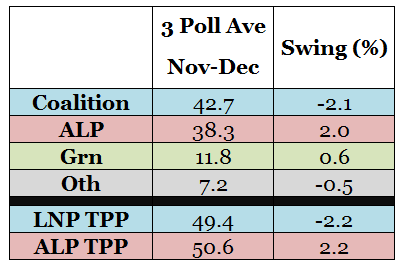
2013 WHILE DISAPPOINTING THAT LABOR LOST POWER WE CAN TAKE SOME COMFORT THAT IN THE LAST POLLS OF THE YEAR A DEFINITE SWING AWAY FROM THE IDIOT AND HIS RABBLE.

Table-2-040113

SO CHINS UP AND LETS HOPE THE SLIDE CONTINUES ALL THE WAY TILL HIS GLORIOUS DEFEAT AT THE NEXT ELECTION.

4f90d60620166Ahh Julia!   IF Only?

slider-support-the-refuge-1 (1)

WE DID

YOU WILL BE PLEASED TO HERE THAT DUE TO THE STERLING EFFORTS FROM EVERYONE HERE $750.00 WAS DONATED BY THE PATRONS OF “THE PUB” TO THE SIPPY DOWNS ANIMAL REFUGE TO HELP THEM OUT THIS YEAR. WELL DONE EVERYONE.

CK WATT IS BACK IN ACTION AGAIN FOR THE RAFFLES SO JUMP IN AND GRAB YOUR NUMBERS. GOTTA BE    INITTOWINIT.

inittowinit

HAVE A GOOD TIME ALL AND GOOD LUCK.

Surprise me! No High Level Prosecutions over the GFC???

This excerpt from a brilliant article by Jed S. Rakoff – from the New York Review of Books – is essential reading. I do look forward to comments from many denizens of The Pub.

(Image Credit: Throwing stones from the glasshouse)

The final factor I would mention is both the most subtle and the most systemic of the three, and arguably the most important. It is the shift that has occurred, over the past thirty years or more, from focusing on prosecuting high-level individuals to focusing on prosecuting companies and other institutions. It is true that prosecutors have brought criminal charges against companies for well over a hundred years, but until relatively recently, such prosecutions were the exception, and prosecutions of companies without simultaneous prosecutions of their managerial agents were even rarer.

The reasons were obvious. Companies do not commit crimes; only their agents do. And while a company might get the benefit of some such crimes, prosecuting the company would inevitably punish, directly or indirectly, the many employees and shareholders who were totally innocent. Moreover, under the law of most US jurisdictions, a company cannot be criminally liable unless at least one managerial agent has committed the crime in question; so why not prosecute the agent who actually committed the crime?

In recent decades, however, prosecutors have been increasingly attracted to prosecuting companies, often even without indicting a single person. This shift has often been rationalized as part of an attempt to transform “corporate cultures,” so as to prevent future such crimes; and as a result, government policy has taken the form of “deferred prosecution agreements” or even “nonprosecution agreements,” in which the company, under threat of criminal prosecution, agrees to take various prophylactic measures to prevent future wrongdoing. Such agreements have become, in the words of Lanny Breuer, the former head of the Department of Justice’s Criminal Division, “a mainstay of white-collar criminal law enforcement,” with the department entering into 233 such agreements over the last decade. But in practice, I suggest, this approach has led to some lax and dubious behavior on the part of prosecutors, with deleterious results.

If you are a prosecutor attempting to discover the individuals responsible for an apparent financial fraud, you go about your business in much the same way you go after mobsters or drug kingpins: you start at the bottom and, over many months or years, slowly work your way up. Specifically, you start by “flipping” some lower- or mid-level participant in the fraud who you can show was directly responsible for making one or more false material misrepresentations but who is willing to cooperate, and maybe even “wear a wire”—i.e., secretly record his colleagues—in order to reduce his sentence. With his help, and aided by the substantial prison penalties now available in white-collar cases, you go up the ladder.

But if your priority is prosecuting the company, a different scenario takes place. Early in the investigation, you invite in counsel to the company and explain to him or her why you suspect fraud. He or she responds by assuring you that the company wants to cooperate and do the right thing, and to that end the company has hired a former assistant US attorney, now a partner at a respected law firm, to do an internal investigation. The company’s counsel asks you to defer your investigation until the company’s own internal investigation is completed, on the condition that the company will share its results with you. In order to save time and resources, you agree.

Six months later the company’s counsel returns, with a detailed report showing that mistakes were made but that the company is now intent on correcting them. You and the company then agree that the company will enter into a deferred prosecution agreement that couples some immediate fines with the imposition of expensive but internal prophylactic measures. For all practical purposes the case is now over. You are happy because you believe that you have helped prevent future crimes; the company is happy because it has avoided a devastating indictment; and perhaps the happiest of all are the executives, or former executives, who actually committed the underlying misconduct, for they are left untouched.

I suggest that this is not the best way to proceed. Although it is supposedly justified because it prevents future crimes, I suggest that the future deterrent value of successfully prosecuting individuals far outweighs the prophylactic benefits of imposing internal compliance measures that are often little more than window-dressing. Just going after the company is also both technically and morally suspect. It is technically suspect because, under the law, you should not indict or threaten to indict a company unless you can prove beyond a reasonable doubt that some managerial agent of the company committed the alleged crime; and if you can prove that, why not indict the manager? And from a moral standpoint, punishing a company and its many innocent employees and shareholders for the crimes committed by some unprosecuted individuals seems contrary to elementary notions of moral responsibility.

These criticisms take on special relevance, however, in the instance of investigations growing out of the financial crisis, because, as noted, the Department of Justice’s position, until at least recently, is that going after the suspect institutions poses too great a risk to the nation’s economic recovery. So you don’t go after the companies, at least not criminally, because they are too big to jail; and you don’t go after the individuals, because that would involve the kind of years-long investigations that you no longer have the experience or the resources to pursue.

In conclusion, I want to stress again that I do not claim that the financial crisis that is still causing so many of us so much pain and despondency was the product, in whole or in part, of fraudulent misconduct. But if it was—as various governmental authorities have asserted it was—then the failure of the government to bring to justice those responsible for such colossal fraud bespeaks weaknesses in our prosecutorial system that need to be addressed.

Alpha – II

Ian’s allegory continues …

(Image Credit: Wallpaper Stock)

The Alpha female leaves the mountain having seen the conflict. Its beginnings, its aftermath. She moves toward the shadows. She seeks an understanding of what drives the darkness.

She has seen some of her own pack swallowed by darkness. From within. From without. They live in the dusky light of an uncertain future.

Those of the shadows emerge into the light. Their true ugliness not disguised by the aggressive stance and swagger. These are the ones who prey upon the sick, wounded and runt. Not for survival, but for sport. A cabal of the weak. A cluster of the impuissant.

The pack, her pack, retreat. Defeated?, yes. Vanquished? Never. They still belong to the territory, the territory still to them. An immutable bond forged by generations, of births, of deaths, of seasons of plenty and of naught. They are watchful. Ever wary of the surprise attack, the food denied. Not by those who hunger, but by those seek control over strengths they can never understand. Those that cower and cringe before the alpha male, then slink in his shadow, need the control. They seek a power denied them for too long. They seek it from the bloodied, the broken and the dead.

The Alpha female steps cautiously into the shadows. A foreboding grips her. An uneasiness borne of many battles fought. Both won and lost. She seeks the pack that controls the alpha male. The pack he cringes and cowers to. She seeks their leader. The supreme alpha and a dominant female.

That they exist is of no doubt.

Their spore permeates all around. The sour stench of their territory marking waters. Their scat willingly dispersed by the air scavengers. Once a clean, invigorating force for life, the air now hangs dead. Oppressive, stultifying and sour.

But there is life in this place … this darkness. Life that sees only the kill, that rejoices in the corpse. Never understanding that even the corpse, by its very decay, sustains life and helps give birth to the very innocence they seek to destroy.

This is the lair of the supreme alpha.
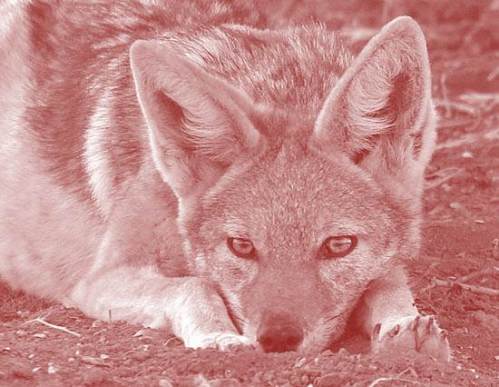
(Image Credit: Worldwidefeatures)

Finding a tussock on the bank of a dry creek, a comfortable way from the lair, the Alpha female settles to watch, to wait, to learn. She observes and learns much about the supreme alphas’ pack – those she had seen coming out of the shadows and who had, once, annoyed her with their constant yapping and nipping. She now understood that they were many, each returning to the shadows only to be replaced by another. All cringed and cowered before the supreme alpha. All rolling in the scat dropped by the air scavengers, each revelling in the power of the supreme alpha. None notice that their toxic slavering eats at their strengths till none exists. They have become the worst of life. They live, as do all sycophants, but only just. When the supreme alpha passes so shall they. The irony of their deaths feeding new and exciting life is lost on them.

Having observed enough the Alpha female begins to leave. The supreme alpha emerges from his lair. She stays. Observes.
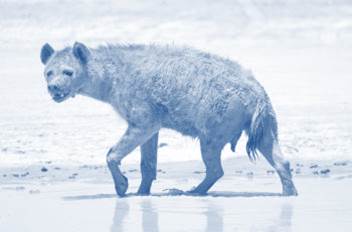
(Image Credit: Scotch Macaskill )

He is frailer than she remembered. His sparse coat shows the inevitable mange that age bestows. His fangs worn, cracked, yellow. His puce-coloured tongue lolls out of his mouth as he gasps for breath. Young females gather around him. He accepts the regurgitated meat they spew at his feet and begins to eat. He looks shrivelled, dry, worn out. Then he turned, saw her, and she looked into his eyes.

Expecting hate, passion, fire, she saw only a cold malice fed by a malignancy too deep to ever be understood. They were the eyes of one who had died long ago. Then the Alpha female understood what she was seeing. Dry and shrivelled as he is, he needs the malice to keep alive. He needs to feed from the malignancy within even more than it needs to feed off him. Finally, she looked into the maw and began to know him. Why many of the weak and corrupt followed him. A nobility of purpose that gives strength to pack or individual scares them. To him, nobility of purpose is a weakness to be exploited, scorned, derided. He gives them an open cruelty; they repay with cowering obeisance. The weak and corrupt are his for as long as he has use of them.

Yet the supreme alpha didn’t wield true power. His was a power built on the willing subservience of the lesser. On those that surrender, to him, their chance to enjoy a pure sunlight, to drink of a sweet, clean creek, to taste the meat of an honourable kill. Those that sacrifice what they could have been for what they have become. A power built, not on what the heart is capable of, but of what it is denied. The power he used for so long has always been a mirage. Some take the mirage as truth or substance. Many more do not.

A rustle behind her forced the Alpha female to break eye contact.

A younger female, dominant, stood below in the dry creek bed. The Alpha female recognised her as the consort of the alpha male and confidante of the supreme alpha.

She leapt, wanting to rip, tear and shred a throat, vulnerable to her fangs and jaws. To feel the last of breathes expelled from dying lungs. The Alpha female did none of this. She swerved, landed and turned to the dominant one and studied her.
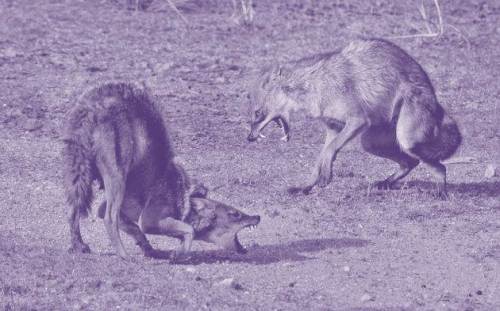
(Image Credit: The Hindu)

What she saw gave her pause for reflection. Again seeing a lust for dangerous power – yet no understanding of the uncontrollable nature of what power can be. Power, in its true essence, is impartial: belongs only to itself; returns to itself. To believe that it can be subverted at will is the purest of folly. A dangerous folly.

The Alpha female broke from her study of the dominant female. It was time to head back to the mountain. There was much to think about, much to consider.